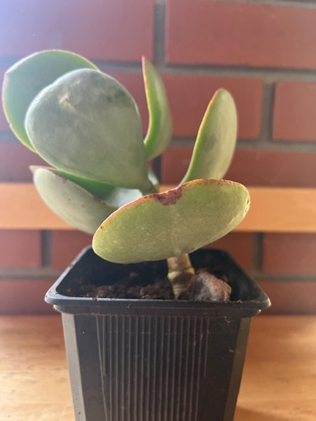

If you bought plants on Powell Ave. at the Great Glebe Garage Sale, you can find out how to care for them right here. These plants were grown by our neighbours, not at Rootcraft, but we have a website where we can post the info and they don’t. Also, they’re our family😊
The silver dollar jade (Crassula arborescens) is named for its round, blue-grey foliage that resembles silver coins. In bright light conditions, its leaves develop a deep red color around the edges, and it is also common for some leaves to have red spots.
Light
Silver Dollar Jade Plant needs very bright light with at 6-8 hours of direct sunshine. Keep it away from too hot midday sunshine to prevent scorching of the leaves. Rotate the pot regularly to ensure that the plant receives light on all sides for a balanced growth and to prevent lopsided growth.
You can choose to grow the your Silver Dollar Plant outdoors, however, gradually acclimate it and place it in a shaded place to avoid scorching the leaves.
Temperature and Humidity
Silver Dollar Jade requires an average warmth of 15-260C during the growing season and a minimum of 100C in the cold season. Keep it away from cold drafts like windy windows and doors as they can cause brown leaf spots.
Silver Dollar Plant flourishes in an average humidity of 50-55%; it has no need for high humidity.
Watering
Water your Silver Dollar Plant deeply in spring and summer while allowing the top half of soil to dry out between waterings. Keep the soil moderately moist and avoid overwatering to prevent rotting, yellowing and leaf drop.
Lessen watering in fall and winter as growth is minimal to maintain the soil barely moist but do not let it dry out completely to avoid wilting and leaf drop.
Only use water that is at room temperature to water the plant to avoid shocking this tropical plant as it can cause sudden leaf loss.
Fertilizer
Feed your Silver Dollar Jade with a cactus and succulents fertilizer monthly in spring and summer for lush growth. Take care not to overfeed as the plant is a slow grower.
Stop feeding in fall and winter as growth is minimal at this time and feeding at this time can result in fertilizer burn and death of the plant.